

Maxi-rib and inflatable Boat Tests: far from theoretical figures and scenarios
BOAT REVIEW ’s maxi-rib and inflatable boat tests are shaped by a clear and well-defined editorial philosophy: to provide readers with an in-depth analysis, carried out with method, experience, and deep nautical expertise, of the finest maxi-rib and inflatable boats currently available on the market, in order to assess their seakeeping characteristics and potential under realistic conditions, far from ideal scenarios and theoretical figures. Each maxi-rib and inflatable boat is taken out on the water by BOAT REVIEW’s professional testers exactly as an owner would do: powered and driven along routes that simulate real-world use, from short day trips to more demanding passages, including harbor maneuvers, docking alongside piers, and navigation in rough seas.
Our tests in detail
The process usually begins with an analysis of the hull, the most decisive element in terms of safety and performance for this type of boat. Special attention is paid to the transom deadrise angle, the possible presence of steps, the shape of the lifting strakes, and the way these interact with the water at different speeds. The hull’s ability to cut through waves, absorb impacts, and maintain consistent grip—without cavitation or loss of adhesion—is evaluated, especially during tight turns and high-speed maneuvers.
Once the design philosophy of the hull has been fully understood, the sea trial moves into its core phase. The boat is progressively brought through all operating regimes, analyzing acceleration, time to plane, and the craft’s response to trim adjustments. Particular attention is given to longitudinal and transverse trim, assessing how the maxi-rib and inflatable reacts to load shifts and weight distribution on board. At cruising speed, the testers focus on directional stability, any need for helm corrections, and the overall responsiveness to controls.
BOAT REVIEW’s maxi-rib and inflatable boat tests are conducted in the widest range of weather and sea conditions, often with choppy seas, strong winds, and steep waves. These conditions are frequently far from ideal, but precisely for this reason they are valuable in simulating real-world use of an maxi-rib and inflatable boat and in assessing its actual ability to stay on plane, its behavior in waves, its handling of gusts, and the level of protection it offers the crew from spray. This is because BOAT REVIEW’s goal is not to describe how an maxi-rib and inflatable should perform, but how it really performs, in order to highlight strengths and weaknesses and provide the end reader with the most objective and comprehensive review possible.
A central element of BOAT REVIEW’s maxi-rib and inflatable boat tests is the study of propulsion, analyzed in close correlation with the hull. During testing, our testers evaluate engine responsiveness, noise levels, the ideal cruising rpm, and achievable top speed, while always keeping an eye on the overall efficiency of the propulsion system. Fuel consumption is measured at different engine speeds, in close relation to the maxi-rib and inflatable’s range and cruising autonomy. Acceleration tests are also carried out, both from a standstill and while already on plane, along with breathtaking turning maneuvers. These moments are often conveyed not only through words, but also through engaging videos shot from different cameras and angles, allowing the reader-viewer to follow every phase of the navigation from the comfort of their own home.
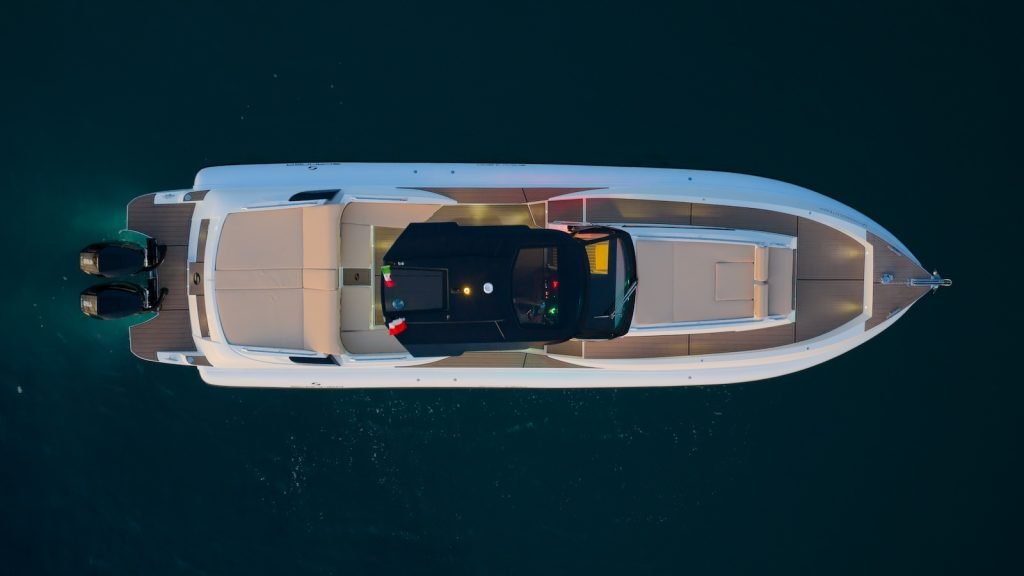
Maxi-rib and inflatable Boat Tests: in-depth analysis of the spaces
Once the so-called “dynamic” analysis has been completed, BOAT REVIEW’s sea trials focus on the exterior spaces, evaluated not only in terms of layout but also in terms of real functionality both underway and at anchor. The side decks are examined, analyzing their width, continuity, and safety—key elements to ensure smooth and protected movement from stern to bow even in rough seas or with less experienced crew on board. The arrangement of handholds, the height of the tubes, and their interaction with the deck are observed, with particular attention paid to onboard circulation safety.
Great importance is given to seating ergonomics, both underway and at anchor, assessing correct height, backrest angle, and the level of support provided in different sea conditions. The sunbathing areas at the bow and stern are analyzed in terms of usable surface area, ease of setup, and integration with the rest of the deck. The helm console is studied for its ergonomic layout, the protection offered by the windscreen, the positioning and accessibility of controls and navigation instruments, as well as the level of visibility it provides in all phases of navigation, from low-speed maneuvers to higher cruising speeds. The analysis of lockers and storage spaces is equally thorough, evaluating capacity, ease of access, and effective use of available volumes. The aft platforms are tested for real-world functionality, considering their size, stability, and ease of use when boarding or entering the water, as well as the effectiveness of bathing ladders and the practicality of access to the sea.
Finally, attention turns to the interior spaces, where present, or more generally to below-deck volumes. In Boat Review’s maxi-rib and inflatable boat tests, interior analysis is approached in a concrete and functional manner, first and foremost assessing the quality of finishes, the choice of materials, and the level of build craftsmanship. Surfaces, upholstery, the quality of the woods used, and the overall aesthetic result are carefully examined. Great importance is given to usable headroom and volume management in relation to the overall size of the boat and their actual degree of livability. The layout of berths, heads compartments, and any technical spaces is analyzed in terms of accessibility and practicality, evaluating the possibility of moving below deck without sacrificing comfort and safety. Natural ventilation, often provided by hatches, skylights, and air intakes, is carefully considered, as is natural lighting.
BOAT REVIEW also pays particular attention to the overall sense of habitability, assessing whether the interior spaces convey a genuine feeling of comfort or are instead merely a design compromise. The analysis of interior volumes is finally completed by evaluating internal storage spaces, the presence of dedicated lockers for onboard equipment or personal belongings, and the rationality of the solutions adopted.
All of this is conveyed using, as always, a solid technical language that remains accessible to everyone.